The AI-Powered Product Engine: Linking Structured UXR, RAG, and Design Systems
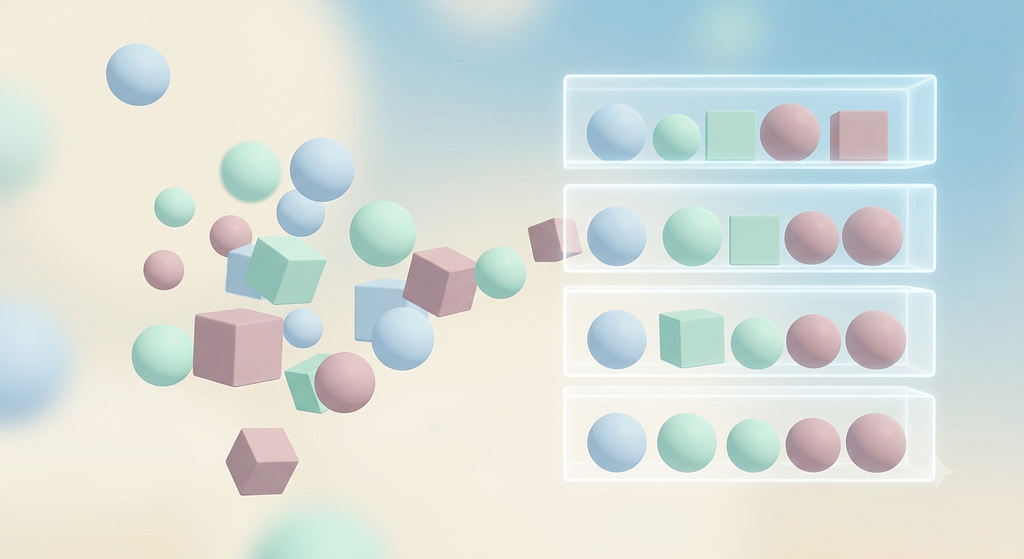
We have all seen what happens when a company tries to fix a messy workflow by throwing an AI tool at it. You get generic answers, hallucinated facts, and a lot of frustrated teams.
The issue isn’t the AI itself; it is how we feed it. Right now, user research sits forgotten in slide decks, while design systems live in isolated Figma files. When you try to connect an AI to flat, disorganized documents, it has no way of understanding the bigger picture.
The real unlock happens when you connect what you learn about your users directly to how you build your product. By structuring your user research into a clear chain of logic and linking it directly to your design system, you build an internal knowledge base that actually gets smarter over time.
1. Organizing Research to Show the “Why”
To make user research genuinely useful for both humans and software, we have to stop writing isolated, text-heavy reports. Instead, every piece of research needs to be broken down into a clear, connected chain of events.
Instead of archiving a random list of findings, every study should follow a predictable lineage:
When you organize data this way, you create an explicit paper trail. A piece of data is never left standing alone.
The Difference Between Raw Data and Context:
- Unstructured finding: “Users don’t like the checkout button.”
- Structured finding: We hypothesized that the checkout button was too low on the page for mobile users. We tested this with 20 unmoderated mobile sessions. We learned that 40% of users missed the button entirely because it fell below the screen fold. This gives us the opportunity to create a sticky bottom-navigation component for mobile screens.
2. Why Smart Search Requires Better Structure
This is where Retrieval-Augmented Generation (RAG) — which is essentially just a highly targeted, context-aware search engine — comes into play.
If your research library consists of scattered PDFs, a search tool can only look for basic keywords. But if your library preserves the links between hypotheses, methods, and outcomes, the search engine can understand the intent behind the data.

3. Linking Insights Straight to Code

An intelligent research library is great, but it becomes truly effective when it talks directly to your design system.
When your design system is built using flexible components and design tokens (like standardized spacing, colors, and typography), it can adapt based on what your research proves to be true.
[User Problem Discovered]
       │
       ▼
[System matches problem to a proven research insight]
       │
       ▼
[System identifies the exact UI components involved]
       │
       ▼
[Design System updates or surfaces the correct pattern to fix it]
For example, if your research base flags a recurring insight that older users are struggling to read small text in a specific workflow, it shouldn’t just sit as a note in a dashboard. The system should flag the exact typography tokens used in that workflow and suggest high-contrast layout variations that align with your team’s accessibility guidelines.
4. The Real Job of a Designer: Strategy and Foundations

When systems become this connected, the day-to-day work of a designer changes completely. The hours spent manually resizing buttons, creating endless layout variants, and hunting down old research links start to disappear.
The focus shifts away from production work and moves toward two distinct areas: Strategy and Operations.
- Product Strategy
Designers will spend less time drawing interfaces and more time framing the problems that need solving. The job becomes about setting clear goals, challenging assumptions, and ensuring the team is asking the right questions before any testing begins. Human intuition and empathy remain the ultimate filter for deciding what actually gets built. Documentation of insights will be the main structured output.
- Systems Operations
Since tools are only as good as the information they are given, maintaining the framework becomes the most critical task. Designers and researchers will focus heavily on building clean design tokens, setting up the classification rules for user data, and making sure the foundations of the system are unbiased, accurate, and up to date.
By stepping out of the pixel-pushing loop and into a foundational role, design teams stop fixing one-off problems and start building systems that fix themselves. Design systems will be the main output to update.
Fredy Pascal
Principal Service & UX Designer
Ciao ciao
How this piece came to life (my HIAH Process):
✍️ Human First: Pouring raw ideas and unique perspectives into the initial draft.
🤖 AI Enhanced: Cleaning up grammar and sharpening the overall flow.
🎨 AI Image Generation: Crafting custom visuals to bring the concepts to life.
👀 Human Last: The final human touch — rigorous review and verification before hitting “publish.”
The AI-Powered Product Engine: Linking Structured UXR, RAG, and Design Systems was originally published in Bootcamp on Medium, where people are continuing the conversation by highlighting and responding to this story.