Forget Rewards: Why Frustration is Your Brain’s Fastest Way to Build New Habits
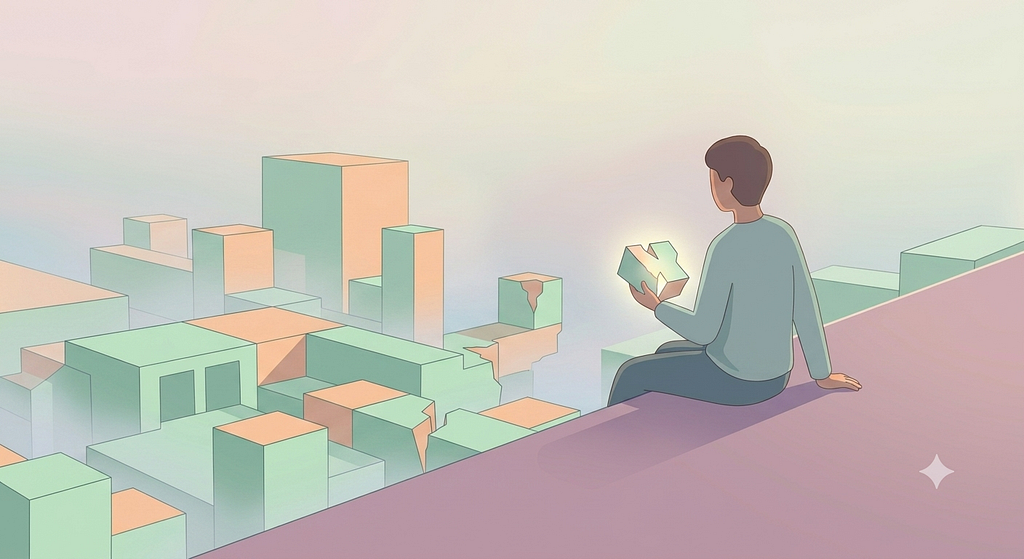
For the past decade, mainstream self-help has beaten a single drum: if you want to change your behavior, you need the classic “cue, routine, reward” loop. We are told to anchor new habits to old ones, make them incredibly easy, and treat ourselves to a hit of dopamine afterward.
But there is a massive flaw in this cozy narrative. Repetition and reward are painfully slow. They require dozens, sometimes hundreds, of frictionless repetitions to stick.
What about the behaviors that change overnight?
Imagine you are miles from home, your baby has a massive blowout situation, and you open your bag only to realize you forgot to pack spare diapers. The ensuing panic, mess, and sheer frustration of that moment create a core memory. You don’t need 66 days of practice to fix this. Your behavior changes instantly. For the rest of your parenting life, you will never leave the house without doing a meticulous mental inventory of that bag.
Your brain has a completely different, lightning-fast pathway for behavioral installation. It doesn’t care about rewards, and it doesn’t need months of practice. It is driven entirely by errors, friction, and frustration.
The Neurological “Uh-Oh” Signal
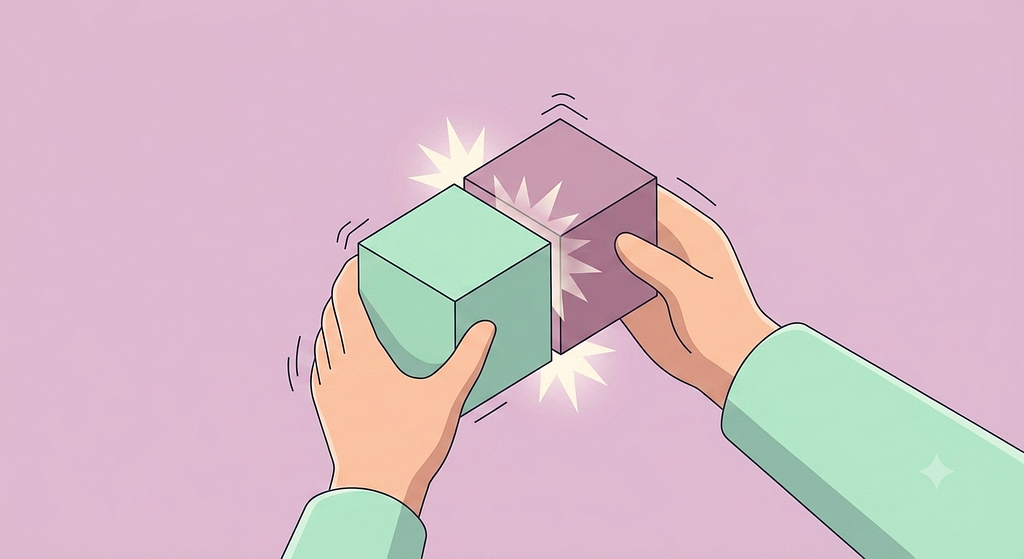
When you attempt something and fail, your brain experiences a “prediction error.” You expected outcome A, but you got outcome B.
In the traditional habit loop, a lack of reward makes a behavior die out. But when you are actively engaged in a task, an error acts like an explosive charge in your nervous system. The moment you realize you’ve messed up, your brain releases a massive surge of two specific chemicals:
- Epinephrine (Adrenaline): This triggers physical alertness and a distinct feeling of agitation. It is the physiological root of frustration.
- Acetylcholine: This acts like a cellular spotlight, intensely focusing your attention on the exact neural pathways that just caused the mistake.
Frustration isn’t a sign that you should quit; it is a physical indicator that your brain is entering a hyper-plastic state.
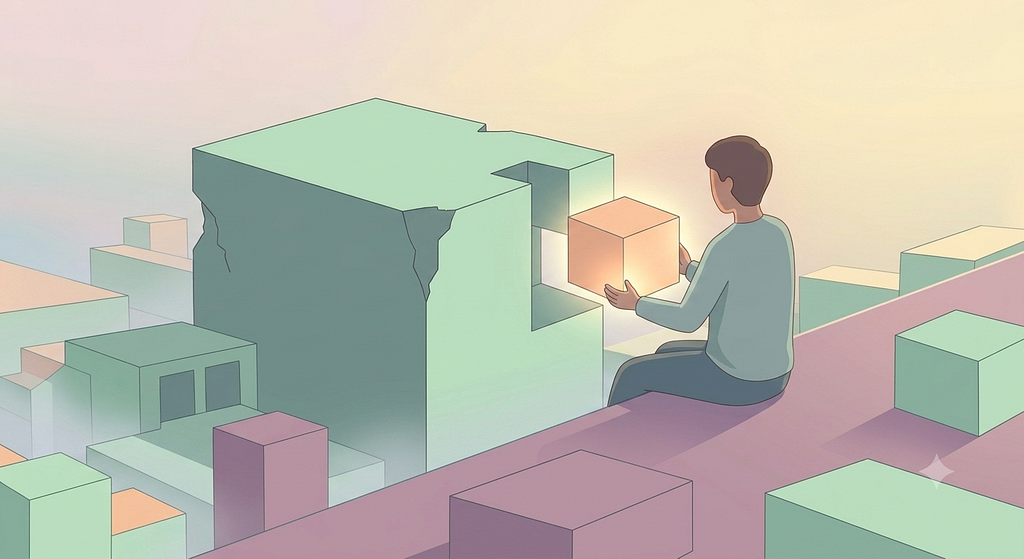
This chemical cocktail opens a brief window of neuroplasticity — the brain’s ability to structurally change and adapt. Your brain hates the feeling of friction and agitation. It wants to solve the error so it can return to comfort. Because of this, it becomes hyper-sensitive to whatever you do immediately next.
Reward Loops vs. Error Loops
To understand why error-driven behavioral change is so potent, look at how the two systems operate under the hood:
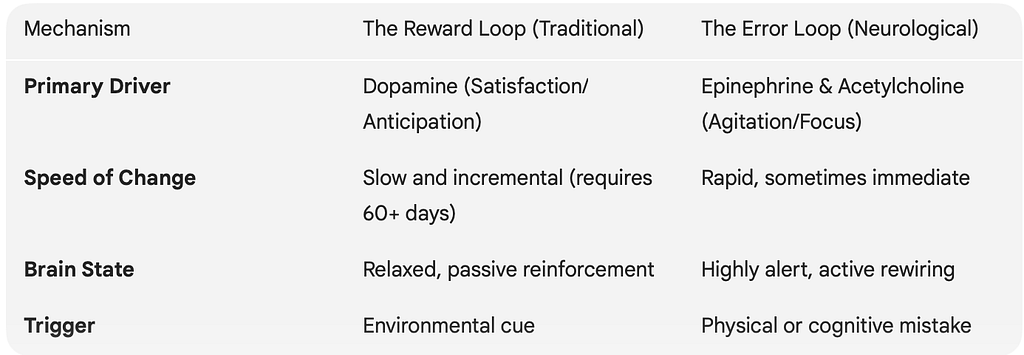
When you rely on rewards, you are training your brain the way you train a puppy — slowly, with treats. When you leverage errors, you are utilizing your brain’s survival architecture. The brain prioritizes fixing mistakes over chasing rewards because, from an evolutionary standpoint, missing a reward means you stay in the current state; failing to correct a high risk mistake means you die.
When Frustration is a Feature: Error-Driven UX
This neurological phenomenon isn’t just useful for personal growth; it is actively being weaponized by elite product designers to shape how we interact with technology.
For years, the gold standard of User Experience (UX) design was frictionless architecture — making apps so seamless that users could navigate them on autopilot. But design dictates have shifted. Completely frictionless interfaces breed mindlessness.
Users start “zombie-clicking” — accidentally deleting files, muting themselves, or tuning out important data.
To fix this, modern UX architects deliberately introduce intentional friction to trigger micro-errors, catching your brain right when the neuroplastic window opens.
1. The “Forgot Attachment” Protocol (Gmail)
We have all experienced the micro-frustration of hitting send, only to realize we forgot to attach the document. Gmail engineered an error-driven UX intervention: if you type the word “attached” but click send without a file, the app forcefully freezes and triggers a stark dialog box. Because this error disrupts your momentum right at the moment of intent, it triggers an immediate behavioral shift. Users who hit this wall a few times naturally alter their real-world workflow — they start attaching documents before writing the email.
2. The “Left Behind” Alert (Apple AirTags & Tile)
Historically, the habit loop for not losing your keys was retroactive and ineffective. You lost them, panicked, and promised to be more careful next time. AirTags flipped this by using real-time geofencing. If you walk 100 meters away from your wallet, your phone triggers an aggressive haptic buzz: “Wallet left behind.” Walking back in the rain because you forgot your wallet is deeply irritating. Because the app delivers this friction immediately after the mistake, it builds a brand new physical reflex: the three-way pocket-tap check the exact second you stand up to leave a restaurant.
3. The “Talking to a Wall” Alert (Zoom & Teams)
Few things are more socially frustrating than delivering a brilliant 30-second explanation in a meeting, only to hear your coworkers yell, “You’re on mute!” Video tools capitalized on this friction. The moment you start speaking while muted, a massive notification flashes: “You are muted.” The app doesn’t unmute you automatically; it highlights your error in real time. This immediate feedback loop has trained millions of professionals to develop a completely new digital instinct: looking directly at the microphone icon before opening their mouth.
The Protocol: How to Defeat Autopilot and Rewire Your Habits
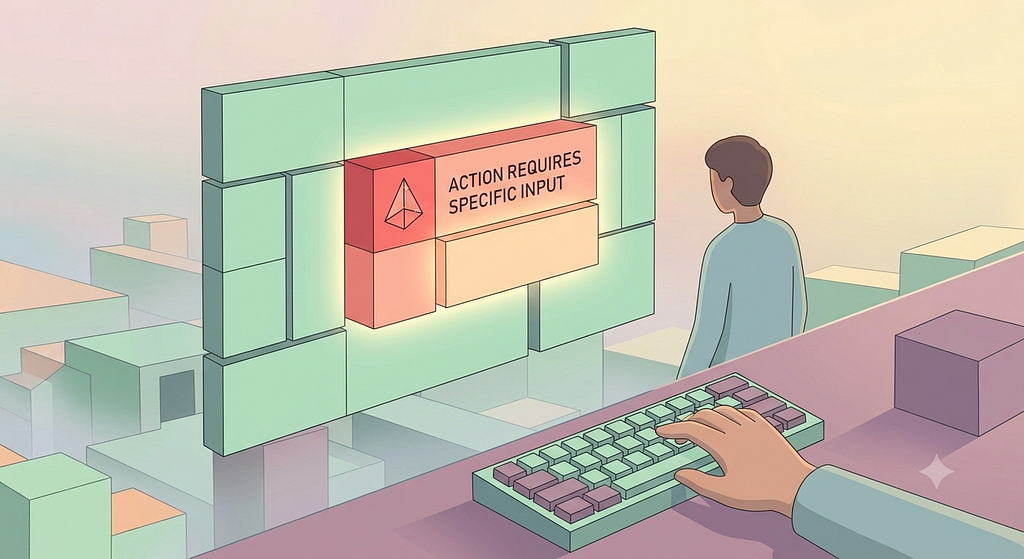
You can actively hijack this system to install new behaviors in your own life. Instead of trying to make a new habit feel pleasant and seamless, you must deliberately push yourself into the zone of friction.
- Deliberately Trigger the Friction: Engage in your target behavior at a level of difficulty where you are guaranteed to make mistakes. If you are learning a language, don’t read children’s books; try to speak with a native speaker where you will constantly stumble. You want to feel that sudden spark of frustration.
- Capitalize on the Neuroplastic Window: The moment you feel that spike of agitation, do not walk away. This is where most people fail. They assume frustration means they are incapable. In reality, that agitation is the gate swinging open. You have roughly 60 to 90 seconds of peak chemical focus to feed your brain the correct data.
- Execute Immediate Corrective Behavior: Force yourself to execute the correct version of the behavior immediately after the error. Because your brain has highlighted the “broken” neural pathway with acetylcholine, the corrected attempt acts like a patch script, instantly rewriting the behavior over the error.
- Clear the Slate: Once you achieve the corrected behavior, step away or pause. This sudden drop in friction releases a micro-dose of dopamine, which acts like a saving mechanism, locking the new neural pathway into place.
Change the Way You Fail
The reason we struggle to build behaviors through errors isn’t biological; it’s emotional. We have been conditioned to view frustration as a negative emotional state. We think it means I am bad at this.
If you want to change your behaviors at a foundational level, you have to reframe that feeling. The next time you try to implement a new routine and it goes horribly wrong, or you feel the deep friction of a cognitive mistake, don’t look for a reward to soothe yourself.
Recognize that agitation for what it truly is: your brain literally lighting up the blueprint of your mind, waiting for you to redraw the lines.
Fredy Pascal
Principal Service & UX Designer
Ciao ciao
How this piece came to life (my HAIH Process):
✍️ Human First: Pouring raw ideas and unique perspectives into the initial draft.
🤖 AI Enhanced: Cleaning up grammar and sharpening the overall flow.
🎨 AI Image Generation: Crafting custom visuals to bring the concepts to life.
👀 Human Last: The final human touch — rigorous review and verification before hitting “publish.”
Forget Rewards: Why Frustration is Your Brain’s Fastest Way to Build New Habits was originally published in Bootcamp on Medium, where people are continuing the conversation by highlighting and responding to this story.